Biocarbon Solutions for Oklahoma Stormwater
Improve stormwater performance, reduce BMP costs, and support resilient landscape development with proven biocarbon solutions.
Proven Benefits Backed by Science
Research demonstrates biocarbon's impact on stormwater performance. Every claim is supported by peer-reviewed studies and regulatory guidance.
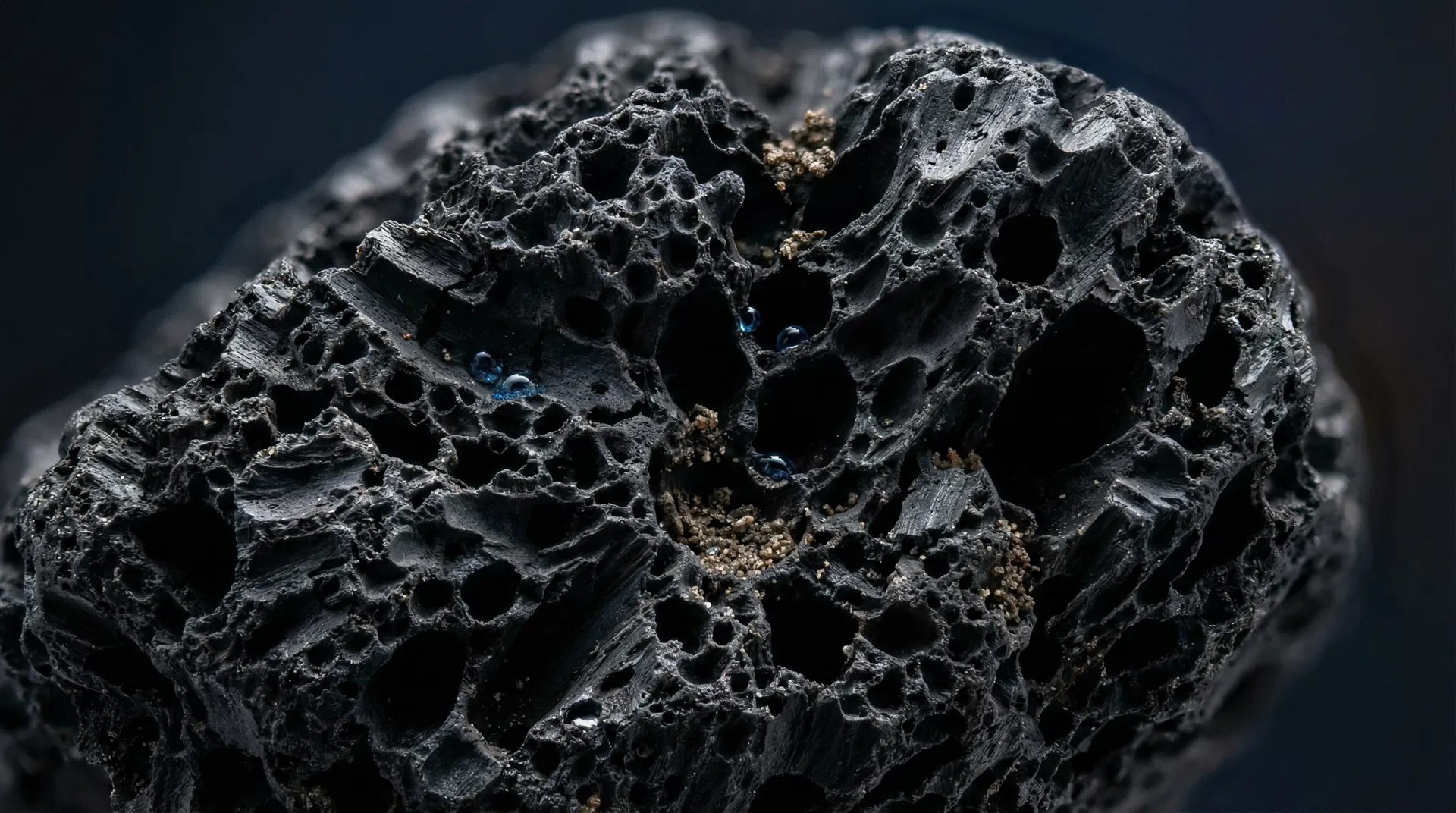
Biocarbon's porous structure can improve soil hydraulic conductivity and water movement through compacted or clay-rich soils, supporting more effective stormwater infiltration in bioretention systems.
- •Improves hydraulic conductivity in clay-dominant Oklahoma soils
- •Reduces standing water and ponding duration on construction sites
- •Supports faster vegetation establishment in bioretention basins
- •Helps meet OSU bioretention design infiltration thresholds
Stormwater Applications
Biocarbon integrates seamlessly into existing stormwater infrastructure and erosion control practices for developers and municipalities.

- Bioretention basins: 10–20% biocarbon by volume
- Erosion control wattles: biocarbon-filled, till-in post-construction
- Detention pond outlet filters for nutrient removal
- Revegetation enhancement to reduce irrigation and mowing

- Rain garden networks for TMDL nutrient reduction compliance
- Permeable pavement base layers for water quality improvement
- Street sweeping waste converted to biocarbon-amended soil
- Stream bank stabilization with biocarbon-enhanced media
Built for Oklahoma Stormwater Challenges
Oklahoma's clay-rich soils, intense rainfall events, and growing regulatory requirements create a unique demand for engineered stormwater solutions. Biocarbon directly addresses these challenges while creating cost advantages for developers.
Clay Soils & Compaction
Oklahoma's native clay-rich soils and construction compaction can limit natural infiltration rates below 0.25 in/hr — the OSU threshold requiring engineered media or underdrain systems.
Regulatory Pressure
Oklahoma DEQ administers MS4 stormwater permits for 42 municipalities requiring pollution prevention programs, sediment controls, and nutrient discharge reduction.
Local Production Advantage
BioCarbon Oklahoma produces biocarbon from local wood waste — often collected at negative cost through tipping fees — enabling competitive pricing unavailable to out-of-state suppliers.
Local Production, Local Advantage
BioCarbon Oklahoma transforms the state's wood waste into high-performance biocarbon — creating a closed-loop system that benefits Oklahoma developers, municipalities, and the environment.
per application
Biocarbon Stormwater in Action
See how biocarbon-enhanced stormwater systems are being applied across the country.
Biocarbon-amended bioretention basin treating runoff from a residential development site
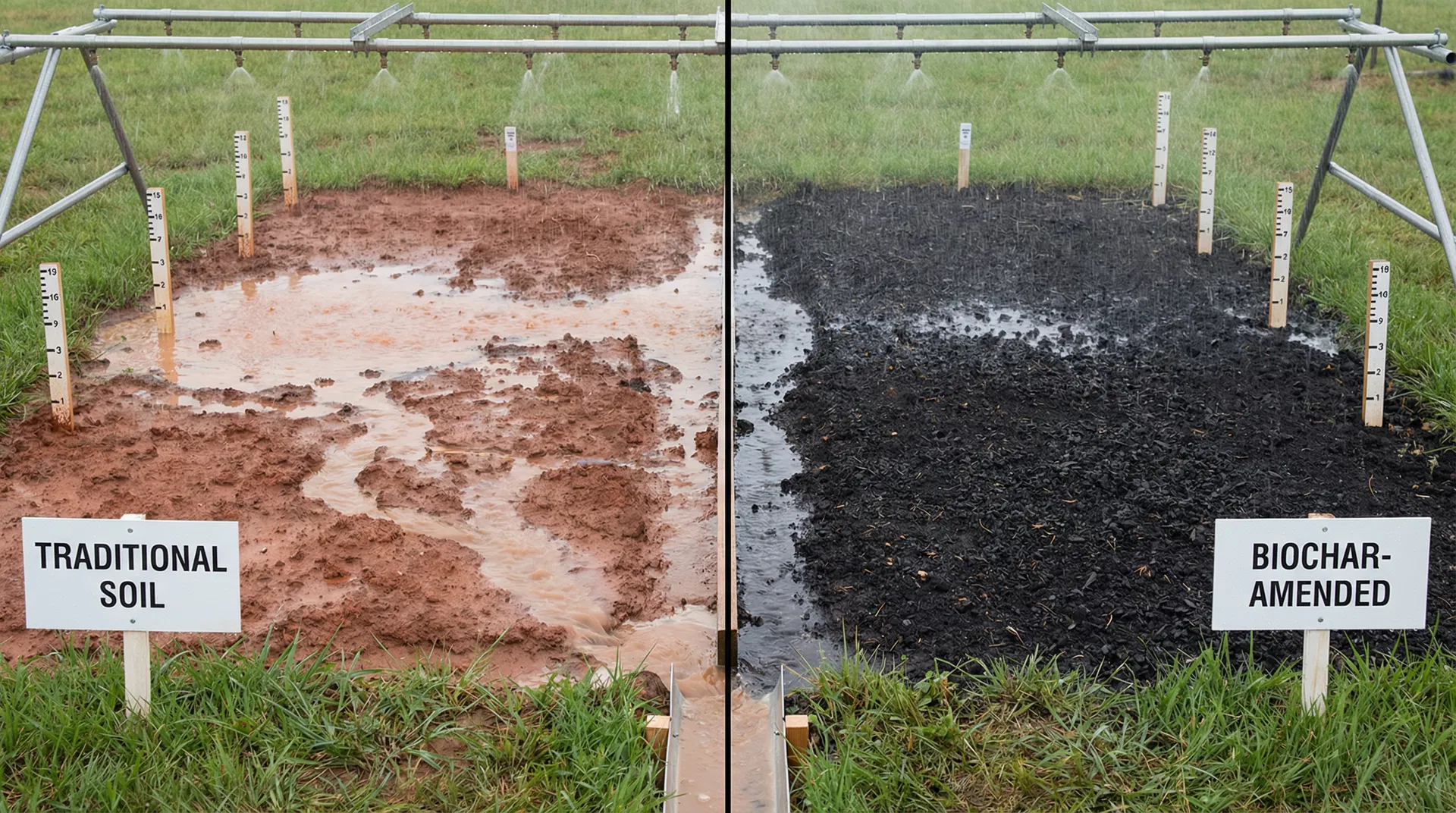
Infiltration comparison: biocarbon-amended media (left) vs. conventional soil (right)
Biocarbon's porous microstructure — the key to improved infiltration and pollutant adsorption
How We Work With You
A structured pilot-to-scale approach that de-risks adoption and builds confidence before full deployment.
Site Assessment
Soil testing, infiltration analysis, and regulatory review to determine biocarbon blend ratios and application methods for your specific project.
Pilot Project
Small-scale demonstration (1 subdivision or detention basin) to validate performance and refine specifications before full deployment.
Full-Scale Deployment
Integration into standard specifications with volume pricing and on-site mobile production for large residential or municipal projects.
Monitoring & Reporting
Ongoing performance tracking, carbon sequestration quantification, and ESG impact reporting to support permit compliance and investor reporting.
Typical Timeline
Backed by Rigorous Research
Every claim on this page is supported by peer-reviewed scientific studies and regulatory guidance. Click any citation to read the full source.
EPA Bioretention Fact Sheet
U.S. EPA. Bioretention (Rain Gardens) — Stormwater Management Fact Sheet. EPA 832-F-99-012.
1999EPA Low Impact Development Cost Study
U.S. EPA. Managing Wet Weather with Green Infrastructure — Municipal Handbook. EPA-833-F-08-010.
2008OSU Bioretention Design Guidance
OSU Extension. Bioretention Systems for Stormwater Management — BAE-1536. Oklahoma State University.
2020Biochar in Stormwater Media (2024)
Peer-reviewed research evaluating biochar amendments in stormwater filtration media, hydraulic conductivity, and pollutant removal. Journal of Environmental Management.
2024Biochar-Augmented Stormwater Biofilters
Systematic review of biochar-augmented stormwater biofilters examining pollutant removal performance and hydraulic behavior. Environmental Science: Water Research & Technology.
2020Minnesota Stormwater Manual — Biochar
Minnesota Pollution Control Agency. Biochar and Applications of Biochar in Stormwater Management. Minnesota Stormwater Manual.
2023Want to dive deeper into the science?
Visit International Biochar InitiativeReady to Transform Your Stormwater Strategy?
Contact BioCarbon Oklahoma to discuss how biocarbon can improve your stormwater performance, reduce BMP costs, and support permit compliance.